The Tariff War Rolls On
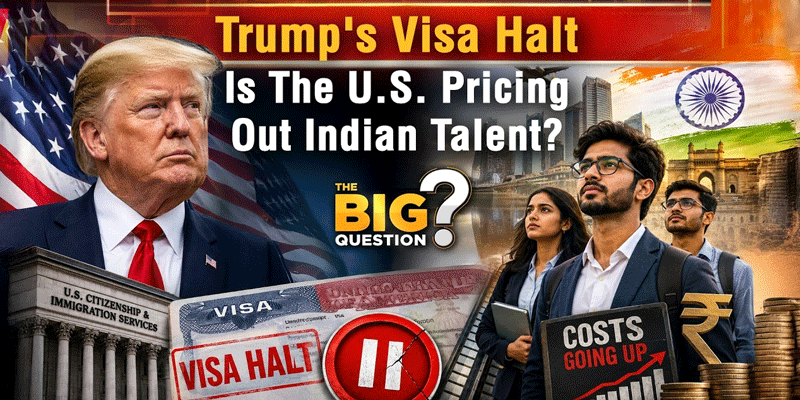
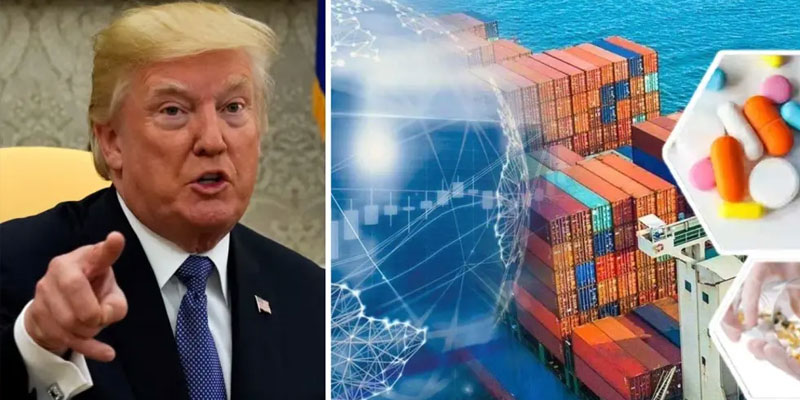
Donald Trump has once again turned up the heat in his long-running trade battle. The U.S. president has announced a fresh round of tariffs, this time targeting one of the most sensitive sectors—pharmaceuticals. Starting October 1, branded and patented drugs imported into the United States will face a staggering 100% tariff, unless the manufacturer is building production facilities on American soil. The announcement rattled global markets, with the immediate impact seen in Asia, particularly India, which supplies a major share of medicines to the U.S.
On September 25, Trump confirmed that brand-name and patented pharmaceutical products will face punitive tariffs unless companies relocate or expand manufacturing operations in the U.S. The president argued that the policy would protect American supply chains and jobs, while also reducing dependence on foreign drugmakers.
This move is consistent with Trump’s earlier rhetoric. Although pharmaceuticals largely escaped tariffs in his first term, he has repeatedly hinted that no sector is untouchable. By linking tariff relief to domestic investment, Trump has presented his latest policy as both an economic and national security measure.
But pharmaceuticals were not the only industry in the crosshairs. Kitchen cabinets will see 50% tariffs, upholstered furniture 30%, and heavy trucks 25%. Trump justified these measures by citing the need to strengthen U.S. industry and shield critical sectors from overseas competition.
Shockwaves in Asian Markets
The ripple effect was swift. Asian equity markets fell as investors braced for disruption. Japan’s Topix pharmaceutical index slipped 1%, Hong Kong’s innovative drug index dropped nearly 3%, and South Korean and Australian biotech stocks also declined.
India, however, faces the sharpest spotlight. With exports of $8.7 billion worth of pharmaceutical products to the U.S. in 2024, the country’s drug industry is heavily exposed. In just the first half of 2025, India shipped $3.7 billion of medicines to the American market. Companies like Dr Reddy’s, Sun Pharma, Aurobindo Pharma, Zydus Lifesciences, and Gland Pharma derive anywhere between 30% to 50% of their revenue from U.S. buyers.
India’s Critical Role in U.S. Healthcare
India’s importance to the American healthcare system cannot be overstated. Roughly 47% of all generic prescriptions filled in the U.S. in 2022 came from Indian manufacturers. Generics from India saved the U.S. healthcare system an estimated $219 billion in 2022 alone and are expected to generate $1.3 trillion in savings over the next five years.
If a 100% tariff is imposed on drugs, the consequences for the U.S. could be severe—higher prices, reduced availability, and potential shortages of essential medicines. While Trump’s announcement specifically targets branded and patented drugs rather than generics, the uncertainty has already placed India’s pharma exporters on edge.
Market Jitters in India
The shock was evident in India’s financial markets. On September 25, the Sensex opened 203 points lower at 80,956.01, while the Nifty dipped 72 points to 24,818.55. Pharma stocks bore the brunt, with Sun Pharma sliding more than 4% in early trade. Cipla and Dr Reddy’s also came under pressure.
Broader indices reflected the same nervousness. The BSE Midcap and Smallcap indices declined, while only a handful of non-pharma heavyweights like L&T and Adani Ports managed to buck the trend. Gift Nifty, which often signals Nifty’s performance, also indicated weakness, opening 62 points lower.
Foreign Institutional Investors (FIIs) continued their selling spree, offloading nearly ₹5,000 crore worth of equities, further weighing on sentiment.
A Divided Debate on Tariffs
Trump’s tariff playbook is not new. He has long argued that high import duties force companies to invest in American plants, thereby creating jobs and securing industries from geopolitical risks. “If you want to sell here, you build here,” he has often declared.
Critics, however, warn that the strategy is counterproductive. By inflating costs, tariffs risk driving up inflation, straining businesses, and ultimately hurting American consumers. In the case of pharmaceuticals, where affordability is already a hot political issue, doubling prices of certain drugs could backfire domestically.
A Risky Prescription
Trump’s latest tariff salvo underscores his determination to weaponize trade as a tool of economic nationalism. While the aim is to strengthen U.S. industries, the blunt force of a 100% tariff on critical medicines could disrupt global supply chains and undermine healthcare affordability.
For India, the immediate threat may be limited since generics form the bulk of its exports, but the uncertainty itself is damaging—affecting investor sentiment, equity markets, and long-term business planning.
The real challenge lies ahead: balancing protectionism with practical healthcare needs. The U.S. relies on Indian generics to keep drug costs manageable. Alienating such a vital partner risk creating shortages at home while shaking confidence abroad.
Ultimately, Trump’s tariff gamble might protect a few factories, but unless carefully calibrated, it risks prescribing higher prices and deeper instability—both for the U.S. and its trading partners.
(With agency inputs)